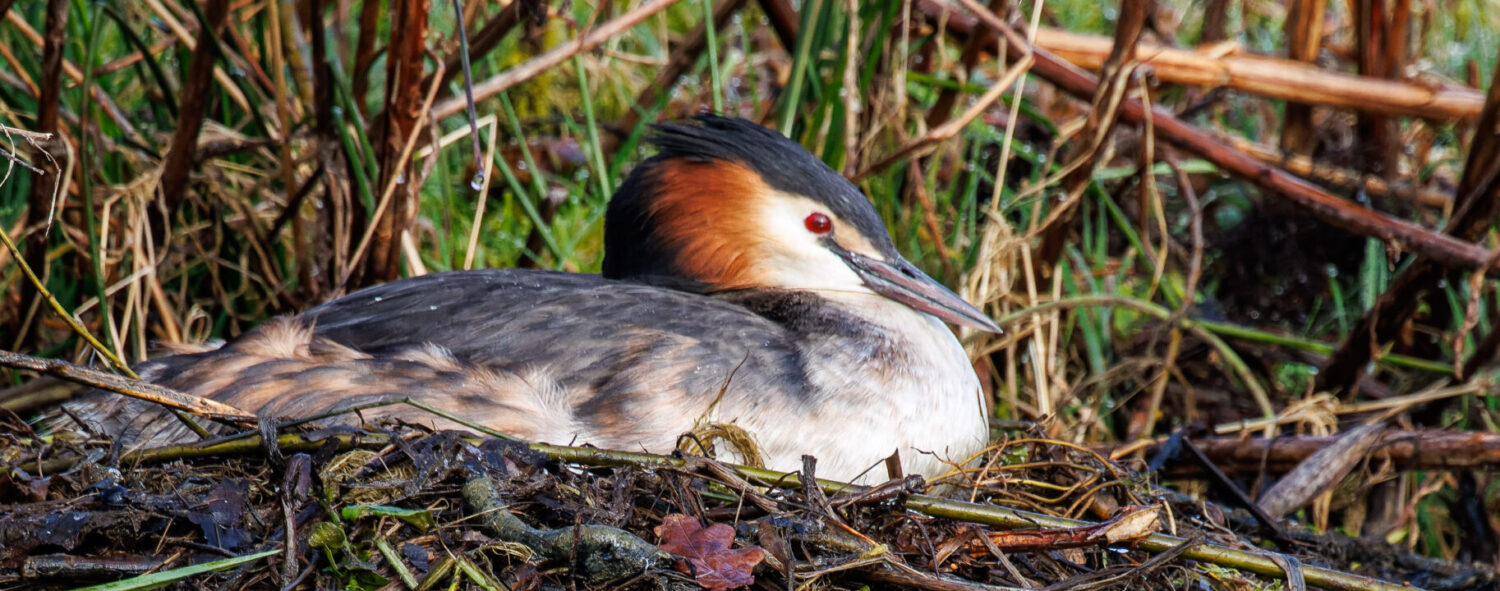
Barn Elms 28 November 2021

Thirteen members gathered at this acclaimed WWT reserve on a bright but bitterly cold morning. Numerous parakeets were squawking loudly around the courtyard. From the impressive range of photographic kit present it was clear that a bittern was urgently needed. Fortunately that came quickly at the Dulverton hide. From there we had a clear but rather distant view across the main lake to a bittern among the reeds on the north side while a female goldeneye conveniently swam right in front of us. A second bittern sunning itself at our second stop, the WWF hide, was much closer and offered superb opportunities for our expert photographers who later circulated some stunning shots. Common snipe were on the grazing marsh near the Peacock Tower and on the lake. Over 70 lapwings were the only wader representatives present. Additional water birds included two shelducks, numerous Egyptian geese, gadwalls, a pochard, great black-backed gulls, numerous shovelers, teal, wigeon and just one each of little grebe and great crested grebe. A water pipit on the grazing marsh flew away before our ID discussion concluded but expert views solicited later established its identification. Total species seen totalled 41, excluding collection birds such as red-breasted geese and wood ducks – beautiful and very striking – but captive in the World Wetlands area.

Puttenham Common 20 November 2021

Eleven members met at Puttenham Common on
Saturday 20th November under overcast skies. After a short walk, we
arrived at Cuttmill Pond where three male Goosanders (IOC name Common
Merganser) were seen through the trees at the edge of the pond.
Approaching carefully, we soon had a very good view. Some of
the Group were able to see the serrated bill through the telescope which
gives rise to the name, “sawbill”.

Several male Mandarin Ducks weaved their way through the overhanging
bushes at the edge of the Pond. Through the telescope, we could see the
very different plumage of the female Mandarin Duck. Other ducks present
were Mallard, Tufted Duck and a colourful Shoveler. A
Kingfisher flew arrow straight across the Pond just in front us,
perching on the opposite side of the Pond where part of the Group were
able to get close up views through the telescope.

After this excellent start to the walk, we made our way to The Tarn,
another large lake where a Grey Heron sat high up at the top of a tall
tree. Two Great Crested Grebes were feeding on the lake.  Walking across
a causeway between two lakes we noted Long-tailed Tit and
Nuthatch.

We climbed steeply to Hillbury, the top of Puttenham Common, reaching
360 feet (109 metres).  A few members heard the call of Dartford Warbler
near the top.  We paused for a well-earned coffee break with a panoramic
view.  A Northern Raven cronked in the distance. On our way back down to
the start point, we came across a wandering flock of Goldcrests,
Blue Tits and Great Tits and heard a Bullfinch.

In 2.5 hours, we covered 2.4 miles, saw twenty two species and heard a further six.

West Wittering 14 November 2021

Thirteen members made the trip to the stunning location of East Head on Chichester Harbour. As we assembled in the car park handfuls of Brent geese flew over on their way to the feeding grounds that were slowly being uncovered on the falling tide. Then several huge flocks of golden plovers appeared high over the harbour circling in their typically tight formations. With this promising start we headed for the marsh pools in search of the high tide roost noting a fair number of rooks in the pastures as we passed. At the pools we found dozens of teal and a scattering of wigeon. The predominant wader species was lapwing while dotted among them were redshanks probing in the mud and a few somnolent grey plovers. Further round we identified nine greenshanks quietly roosting while up to a dozen little egrets accompanied by just a single grey heron stalked around. More waders had already settled on the harbour mud where we counted over fifty black-tailed godwits feeding on the side of a channel. Alongside were small numbers of oystercatchers and more redshanks while a knot feeding close to a grey plover allowed a close comparison of their respective sizes and plumages. By far though the most numerous species was Brent geese stretching away as far as the eye could see. As returned to the car park an unusual duck caught the eye; it had a chestnut coloured head, a duller brown body, a pale blue bill and a white undertail. We later speculated that it might be a ferruginous duck a species more likely to be an escapee than a wild bird.

After an early lunch we took the path around the Head where initially things were quiet (apart from the large numbers of Sunday visitors). At the north end of the dunes we finally encountered some of the golden plovers we had seen earlier their plumages resplendent as they sat on the sand. Distantly over fifty dunlins foraged at the edge of the tide while scanning identified a turnstone, a few more grey plovers and another greenshank. We then tried a little seawatching with limited results. Eventually a red-breasted merganser and a great crested grebe were seen while another grebe puzzled us for a while until it was tentatively identified as a black-necked. The dunes were unproductive but finally delivered a small flock of greenfinches feeding in the marram grass. The bird list for the day totalled 37 species.

Black Down 22 October 2021

Twenty four members met on a still autumn morning at this scenic National Trust site near Haslemere. A few blue tits and a goldcrest flitted around the car park while a jay squawked in the trees. On the way to the Temple of the Winds we encountered a mixed flock of tits and identified five species. Long-tailed tits were as usual the pathfinders but marsh tits with their trumpeting calls were the stars. On a distant pine two redwings were identified offering reasonable scope views. After drinking in the scenery from the viewpoint we left the woodland and were confronted with the sad sight of the rowans for which Black Down is noted already denuded of their leaves and carrying few berries. Down in the valley the whitebeams were also past their best and we were unable to spot any ring ouzels, our target species, although a goldcrest entertained us as we waited in hope. The ascent from the valley was similarly quiet but enlivened by a raven and a great spotted woodpecker feeding in a distant tree. Towards the end a flock of about twenty finches passed over. We identified them as linnets but when the flock later reappeared as a couple of members were departing from the car park it included a brambling or two. A lucky few also encountered good numbers of brambling with a few chaffinches a short way down Tennyson Lane. The walk was most enjoyable but somewhat disappointing for bird sightings with only 22 species identified.

Farlington Marshes 9 October 2021

Nine members met under a clear blue sky to walk around Farlington Marsh on land reclaimed in the 1700s. Though the tide was low we headed for the lake to try for bearded reedlings at their most active. The strategy paid off as we enjoyed good views of five swaying at the top of the tall reeds, the soft browns and blues highlighted in the sunshine. Formerly called bearded tits the reedling is actually a sister to the larks.  A water rail located at the back of the lake and threading its way stealthily through the reeds was another great sighting. Loud bursts of song came from a nearby Cetti’s warbler hidden in the rushes.

We then took the path diagonally through the western corner of the reserve and by one of the water-filled bomb craters (the area was used to burn fires during World War II to decoy bombers away from nearby Portsmouth) we found an active collection of blackcaps, Cetti’s warblers and chiffchaffs.  A sparrowhawk glided over our heads. Approaching the Deeps we saw many little egrets, at which point an eagle-eyed member saw the head of a glossy ibis and focused us on the area. After a minute’s anticipation we saw a purple head, then a long curved beak and a few minutes later the whole bird as it climbed out of a ditch on to he bank. The dark purple colour stood out in the bright sun. A peregrine flew over high and straight, the bulky body, tapered wings and continuous flight contrasting with the earlier sparrowhawk.

Having finished the circumnavigation of the reserve, we returned to the main lake before high tide. As well as the usual waders and ducks we were aware that a curlew sandpiper had been reported. Trying to locate it among the 20+ dunlins that were running round the legs of black-tailed godwits and a few ringed plovers proved very difficult. However we eventually succeeded in finding the target bird despite the marginal differences in size, bill length and shape from the dunlins but fortunately the good light enabled us to note the peachy wash of a juvenile as well as its slightly longer legs and different running style.

The walk proved both enjoyable and productive with 47 species identified, with some scarce birds seen in excellent viewing conditions.

The Burgh 30 September 2021

Six hardy members braved murky and blustery morning to walk along the South Downs to The Burgh and were fortunate to avoid precipitation from the dark clouds that loomed constantly. Immediately large numbers of pheasant were obvious no doubt much relieved about fewer shooting parties during lockdown. A sparrowhawk flew over while another numerous species was soon spotted, red kites elegantly gliding over the hillsides; at least sixteen were counted usually with a buzzard or two on hand. Then a raven or two cronked into view among the many carrion crows. At the summit several skylarks rose with a couple of meadow pipits below them. Small groups of linnets kept passing and two yellowhammers showed themselves briefly. Migrating swallow with a few house martins in their company kept passing over while a flock of well over a hundred goldfinches put in regular appearances. Down in the valley a marsh harrier was sighted patrolling the meadows and reappeared for further views later in the walk. Partridges though were the primary target but proved elusive in the generous, overgrown field margins. Eventually a group of red-legged partridges was identified crossing an opening in the vegetation. Grey partridges were easier to find but far more difficult to view. The sightings were all of plump, brown packages disappearing over the nearest hedgerow, a photographer’s nightmare! 22 species were identified the limited number compensated by the quality of some sightings and the sheer numbers of the rest.

Titchfield Haven 26 September 2021

Ten members met in the Sailing Club car park on an initially murky morning. The low tide gave an excellent opportunity to watch birds feeding on the shore. There were good numbers of ringed plovers, oystercatchers and the turnstones that are such a notable feature of this location. Among the flock were little egrets and a couple of sanderlings while half a dozen Brent geese provided an early portent of autumn. The star sighting though was a fresh-plumaged drake eider swam swimming on the Solent. The viewpoint over the Meon river was similarly productive. The low water prompted a water rail to emerge from the reedbed and forage in the mud allowing a close and extended view. Gadwall, a grey heron, a couple of redshanks and a great crested grebe were also on display. The sun then came out to enhance the viewing experience. The west side scrapes were much reduced in size because of recent lack of rain and the dried mud was extensive. Nevertheless there was a decent array of waders on show. Lapwings and black-tailed godwits were numerous. Common snipe were in the open, their plumage a treat for the eyes in the sunlight. The highlights were a handsome ruff close to the hide and for a fortunate few a jack snipe making a brief foray into the open while a rock pipit perched obligingly. The ducks present (many still in eclipse ) comprised numerous teal, gadwall, shovelers and mallards. Many swallows and a few sand martins flew through, heading south on migration. Later from the east side some distant house martins were seen. Overall it was a most enjoyable experience with some excellent sightings; species identified totalled 49.

Holmethorpe 16 September 2021

Five members assembled on a beautiful, sunny morning at the Aquasports car park. We headed first to a meadow behind Mercers Farm in search of yellowhammers but the large flock seen earlier in the year was not in the vicinity with only one glimpsed. Instead we had to content ourselves with a perched skylark and a kestrel. More birds were present on Spynes Mere including lapwings, little grebes, gadwall and one wigeon. Sadly the hedgerows had greatly thickened in the past year and views were possible from just a single point though we could see part of the magnificent sand martin bank newly built at the far end. We tried our hand at Mercers West but the view was more restricted than ever and we could see little more than cormorants and hundreds of loafing gulls. Back at Mercers Lake there was little bird activity with views of a few great crested grebes and mute swans plus a flyover by five Egyptian geese. We then drove to the Holmethorpe Lagoons but again the height of untended hedges limited our view and new sightings were limited to a pied wagtail and a lesser black-backed gull.

Church Norton 12 September 2021

The weather for our walk from the visitor centre at RSPB Pagham Harbour to Church Norton and back was superb.

Ten attended and saw at least 44 species.

Top sightings were:

  • ·         Spotted Redshanks in the channel opposite the Ferry Pool (with common redshanks for comparison)
  • ·         Cattle Egrets (x2)
  • ·         Clouds of Swallows and House Martins swooping low over the reeds
  • ·         Stonechats, Wheatears and a Whinchat atop scrub
  • ·         Roosting young Sandwich Terns among the loafing BH Gulls
  • ·         Kestrels, Buzzards and a hunting Peregrine (that gave a great fly-past)
  •         a hungry Osprey over the harbour allowing excellent, lengthy views.

Interestingly, we also saw quite a range of butterfly species today: Small White, Red Admiral, Peacock, Comma, Holly Blue, Small Copper, Speckled Wood and three Painted Ladies.

After a splendid walk some had sufficient energy to head off to the North Wall to look for the the Red-backed Shrike that had been residing there for the past week. Their quest was rewarded by splendid views evidenced by some superb photographs circulated subsequently on Chat.

Pulborough Brooks 4 September 2021

Sixteen members met a cool and overcast morning.  It was initially quiet birdwise around the visitors centre and the zig zag path.  The new feeding station provided some interest with Blue Tit, Great Tit, Robin, Dunnock, Greenfinch and Nuthatch.  In Fattengates Courtyard a Blackcap was seen along with Chiffchaffs calling while a small flock of Long-tailed Tits flew over.

Making our way around to West Mead Hide we disturbed a Redshank from one of the new ponds and it flew around making its distinctive alarm call.  Two Green Woodpeckers were displaying to each other on a fence post, which was interesting to watch.

Once in West Mead hide we were entertained by a couple of Snipe out in the open and around six Winchats in all actively flying around foraging.  A couple of Greenshank appeared and there were quite a few Teal and some Mallard on the water.  A Marsh Harrier took to the air as did a couple of Grey Heron.  Moving to Winpenny Hide we saw a Green Sandpiper and had some closer views of a Greenshank.  A couple of Chiffchaffs and a Whitethroat showed well close by in some blackberry bushes and a distant Wheatear was seen.

We saw a Great Spotted Woodpecker and some Goldfinches as we walked further round the trail.  Moving round to Little Hanger and Nettley’s Hides and the viewpoints, the group had good views of Black Tailed Godwits, Avocets, Lapwings, Teal, Mallard, and Greylag and Canada geese out on the Brooks.  At times small numbers of Swallows and House Martins were in the air.  Kestrel were seen hovering from time to time and three Buzzards were evident, two perched on fence posts and one circling around high up in the air. Treecreepers and Goldcrests were spotted in the woodland.

On the return two Stoats were seen on the path by some of the group.  The sun had finally come out and there were more butterflies out on the wing.  By the end of the walk a total of fifty species of birds had been counted.